Bothy Ballads
As well as music for work, there is also much music about work, which was performed at home or at social gatherings after work was finished. Life in the farm bothies of north-east Scotland provided the environment for a great deal of music making, especially in the late 19th and early 20th centuries. This centred around the unmarried farm labourers who were housed in a bothy on the farm where they came to work their sixth-month ‘fee’ or term. Bothy workers made songs about the ploughing, the horses, their own – often appalling – living conditions, the food served to them by the ‘kitchie dame’, lasses they courted and the farmer himself.
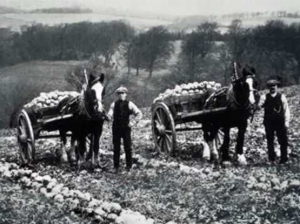
The songs were entertaining, but also served to warn others of the conditions at a particular farm community. Perhaps when the men attended the local feeing fair they would hear some of these bothy ballads, Today the songs provide us with a historical record of the lifestyle of the bothy workers. ‘Rhynie’, sung by Fyvie farmer John Strachan, is a good example.
The ‘bothy chiels’ made their own entertainment, telling stories, singing songs and playing musical instruments such as mouth organs, fiddles and jew’s harps. The jew’s harp has its own built-in drone, which makes it very suitable for Scottish music. It was reportedly the only instrument of the St. Kildans, whose men may have played it to accompany dancing in the croft houses.
Region Tags: Aberdeen & Aberdeenshire; Dundee & Angus; Perthshire


Regions, Aberdeen & Aberdeenshire, Dundee & Angus, Fife